Relevant memory route
The recalled avoid_region intent blocks the prior hazard.
SUCCESS CoreSense Demo
Spatial intelligence. Safer autonomy.
CoreSense Demo
Spatial intelligence. Safer autonomy.
CoreSense Demo uses Amazon Bedrock to embed a robot's prior failure and CockroachDB Cloud to persist and retrieve it after a process restart. The recalled recommendation changes a deterministic route from failure to success.
Retrieval suggests a bounded intent. A deterministic executor decides how that intent changes the public demonstration route.
Load the synthetic situation.
Encounter unsafe terrain.
Write memory and vector.
End the first process.
Run semantic retrieval.
Use avoid_region.
Take the safer route.
Click each condition to inspect the route and recalled memory state.
The recalled avoid_region intent blocks the prior hazard.
SUCCESSThis is an opaque demo evidence identifier, not a production integrity proof. The public repository does not implement or claim a private production integrity-verification protocol.
A visual explanation of where persistent failure memory can support field robotics. External media is clearly separated from this repository's synthetic development fixture.
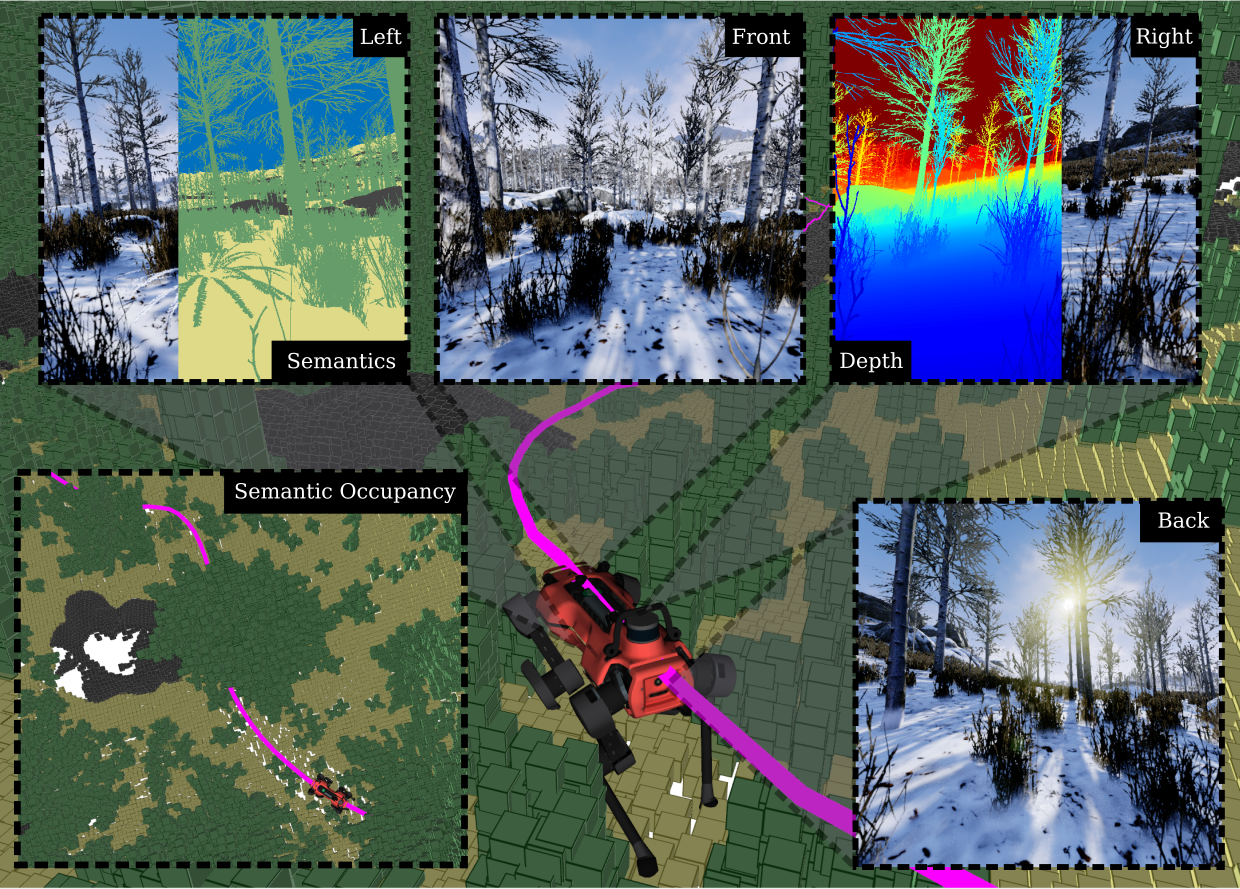
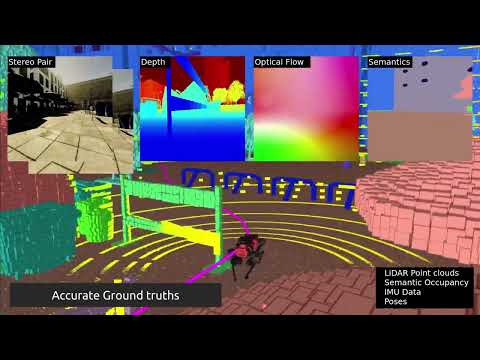
A legged robot inspecting a winter forest, industrial site, or remote facility may encounter an unsafe patch of terrain. A conventional stateless run can repeat the same failure after a software restart. CoreSense demonstrates how the failure can be stored as a searchable memory and recalled when a similar situation appears again.
avoid_region.The repository does not claim that ANYbotics, ETH Zurich, TartanGround, or a named customer uses CoreSense. TartanGround is an external public research reference. The included executable scenario remains synthetic.
CoreSense is a memory infrastructure demo, not a locomotion-model training result. A future evaluation can use public robot trajectories or learned terrain features as memory inputs while keeping policy training and memory retrieval as separate layers.